Lilian Nassif, Director, Fusion Affairs
A technology that costs more than customers are willing to pay will struggle to find buyers, however promising it looks at scale. This idea seems simple, but emerging energy developers often let projections of future scale stand in for a realistic estimate of what their first plants will cost to build and operate, and governments have at times accepted those projections as the basis for public support.
Fusion faces this problem in an unusually acute form. We do not yet have an observed learning rate for commercial fusion power plants, and construction cost, component life, maintenance requirements, and reliable electricity output all remain uncertain. Calling the cost barrier insurmountable goes beyond the evidence, and so does assuming it will disappear with scale. What we can say is that nobody, including the developers themselves, knows today what a commercial fusion plant will cost, and any financing strategy for the sector has to start from that fact rather than work around it.
Green hydrogen, where I have spent much of my career, offers a useful preview of what happens when public support is asked to do work that only sound project economics can do.
Subsidies do not make a project bankable
Emerging energy technologies usually need government support to reach commercial scale, whether through research funding, demonstration investment, tax incentives, or arrangements that make early purchases commercially possible. That support can narrow the gap between what a first-of-a-kind project costs and what a buyer will pay, but it cannot make a project bankable on its own. Lenders finance a project when they can see a creditworthy buyer, a price that covers costs over the life of the asset, and risks they are able to measure and allocate among the parties, and a subsidy addresses only part of the second of those conditions.
Green hydrogen has shown how wide the space between those two things can be. Governments set production targets and offered generous incentives, and developers announced a large pipeline of projects in response, yet only a small share of that pipeline has reached final investment decision, largely because many projects never secured buyers willing to sign long-term contracts at prices that covered their costs. In Australia, the Central Queensland Hydrogen Project was shortlisted for the national Hydrogen Headstart program and was still shelved in 2025 when its lead proponent withdrew, which is a reminder that the availability of an incentive does not mean a commercial case exists.
Fusion sits further from that threshold than hydrogen did. Electrolyzers were a known technology with observable costs when hydrogen incentives were designed, whereas a lender looking at a fusion plant today is being asked to price risks that cannot yet be estimated, and a risk that cannot be priced is very difficult to finance through conventional structures.
What hydrogen has taught us about cost and policy
Hydrogen has also shown that improving a technology and producing a competitive product are different achievements. The International Energy Agency's 2025 review found that inflation and slower deployment raised electrolyzer costs, while lower natural gas prices widened the gap with conventional hydrogen. Better equipment does not guarantee a better business case when the competing product becomes cheaper, and fusion will be competing against sources of firm power whose costs will also keep moving.
Policy durability matters as well, because incentives that change during development alter the assumptions underpinning investment and purchasing decisions. The United States' 2025 budget law limited the clean hydrogen production tax credit to facilities that begin construction before 2028. That change does not by itself explain any particular project's cancellation, but it illustrates why a project that only works with a specific subsidy in place is exposed to every future budget negotiation.
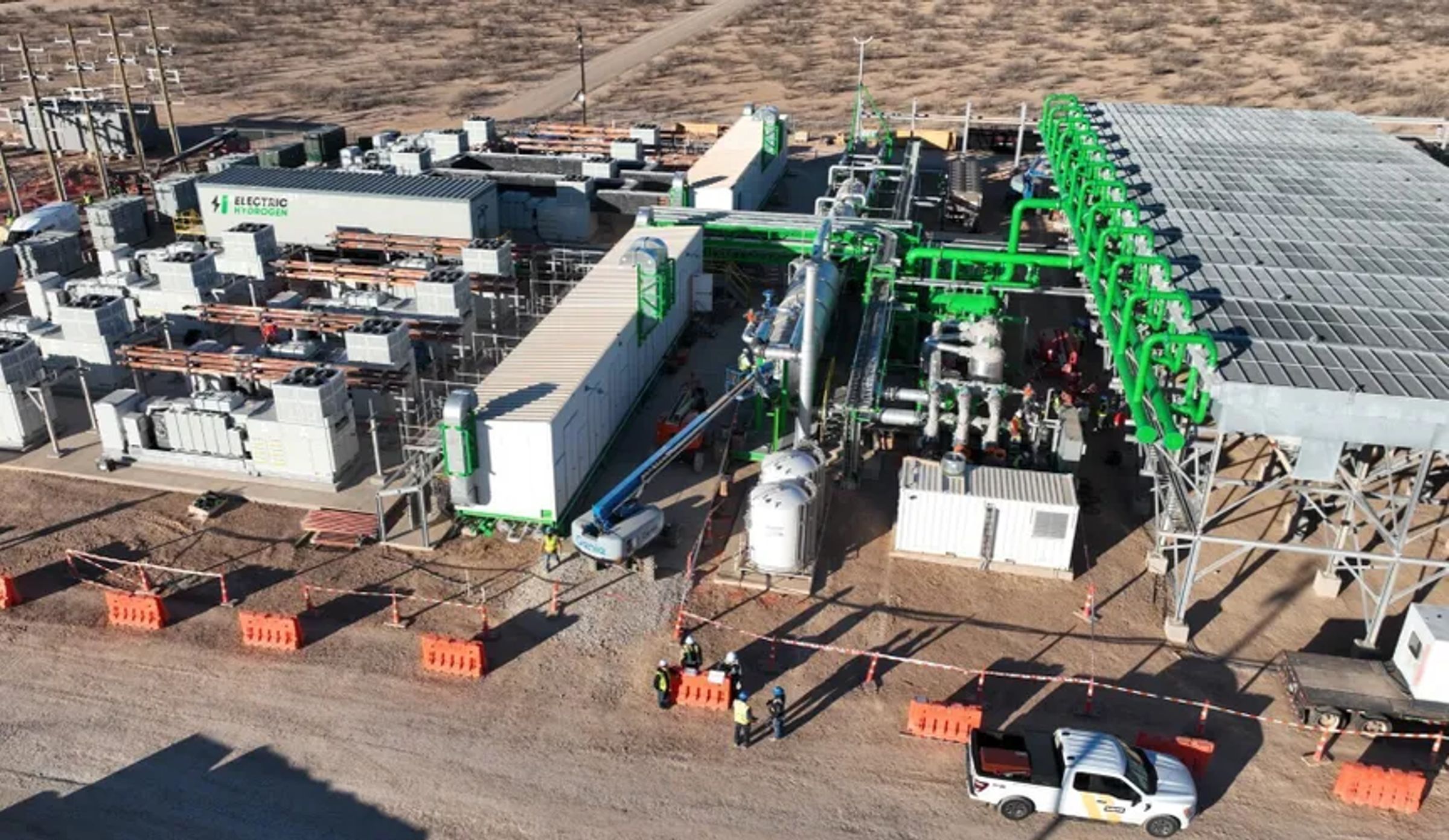
The experience of Orica, the Australian explosives and ammonia manufacturer, shows both the value and the limits of public support. When Origin Energy withdrew from their Hunter Valley Hydrogen Hub in October 2024, citing input costs and slow market development, Orica continued with public commitments of roughly AU547 million,made up of AU70 million from the federal government, AU45millionfromNewSouthWales,andAU432 million in production credits under Hydrogen Headstart. That support exceeds the project's estimated capital cost of AU245 million to AU283 million, although most of it is paid as production credits over ten years of operation rather than as construction funding. The project reached final investment decision in 2026, with first production targeted for 2029, and is expected to replace about 7.5 percent of the natural gas feedstock at Orica's adjacent ammonia plant.
Read quickly, the numbers could suggest that subsidy alone carried the project, but what made it financeable was the combination of that support with two other features. The production credits are paid only against hydrogen actually produced, so taxpayers pay for delivered output rather than announced capacity, and the buyer is Orica itself, which removed the offtake risk that stalled many other projects. The comparison with fusion has clear limits, since a 50 MW electrolyzer built from mature equipment has reasonably knowable costs in a way a first fusion plant does not, and because the plant has not yet operated, it illustrates financing design rather than proving that the design works. The case also raises the question governments should answer before committing public money, which is what taxpayers are purchasing, whether emissions reductions, industrial resilience, operational learning, or some combination, and how those benefits will be measured to justify supporting the next plant.
Financing that shares cost risk rather than masking it
If we cannot yet know what fusion will cost, the financing question becomes less about how large a subsidy should be and more about how to share cost uncertainty among governments, developers, buyers, and investors in proportions each can carry. Several approaches, drawn from hydrogen and from the fusion sector itself, point in that direction.
- Paying for milestones rather than promises. The U.S. Department of Energy's Milestone-Based Fusion Development Program releases public funds only when companies meet agreed technical milestones, which ties public money to evidence and gives private investors a clearer view of progress.
- Paying for output rather than capacity. Production-based support of the kind used in Hydrogen Headstart pays only when a plant delivers, which protects taxpayers if a first plant underperforms while still giving lenders a revenue stream they can underwrite once performance has been demonstrated.
- Using competitive auctions to reveal real costs. The European Hydrogen Bank awards a fixed premium per kilogram through competitive bidding, which produces cost information from developers' own bids rather than from their projections, and a similar mechanism for early fusion output would give governments and investors a far better picture of where costs actually sit.
- Separating the producer's price from the buyer's. Germany's H2Global program uses a public intermediary that buys through long-term contracts and resells through shorter ones, with public funds covering the difference, and an intermediary of this kind could allow early fusion plants to sign bankable long-term contracts while buyers pay closer to market rates.
- Bringing buyers in early, and together. Google's agreement to purchase 200 megawatts from Commonwealth Fusion Systems' planned ARC plant, paired with an equity investment, and Microsoft's power purchase agreement with Helion show that large electricity users are willing to take on part of the commercialization risk. Aggregating that demand across several buyers, as the First Movers Coalition has done for low-carbon industrial products, could spread the risk further, although commitments of this kind do not establish a plant's eventual economics or remove its remaining engineering risks.
What these approaches have in common is that they assign specific risks to the parties best placed to carry them, rather than using a subsidy to cover a cost gap that nobody can yet measure.
Fusion's political position is different
One aspect that makes green hydrogen financing fragile in the United States was that its support became tied to a single legislative moment and a partisan reading of climate policy, so that incentives which developers had built their models around were narrowed as soon as the political balance shifted. Fusion is in a stronger position. Support for fusion development has come from members of both parties, reflected in the bipartisan Fusion Energy Caucus in Congress and in legislation that has advanced fusion-specific regulatory provisions with broad backing, and the case for fusion tends to be made in terms of reliable power, energy security, and industrial capability rather than climate policy alone.
The strategic dimension reinforces that coalition. China is investing heavily and consistently in fusion research and supporting infrastructure, and a credible American position in the technology, together with the supply chains, specialized components, and skilled workforce it depends on, is increasingly treated as a matter of national competitiveness and security. That framing gives fusion a political durability that green hydrogen did not have in the United States.
This does not remove the risk that policy will change, but it shifts where the central difficulty lies. For fusion, the harder question is less whether political support will hold and more whether the industry can reach a commercially viable price. Answering that question requires a first plant, because only a plant that is actually built and operated will reveal what fusion costs to construct and run, how it performs at scale, and whether a supply chain exists that can deliver the components the next plants will need.
Where this leaves fusion
Public financing still has an important role, and it should help resolve risks in a deliberate sequence. Research grants can support materials testing, fuel-cycle development, and component durability; demonstration funding can establish whether a plant is maintainable and useful to the grid; and once performance is sufficiently credible, procurement commitments, output-based price support, or carefully limited guarantees can help early buyers and investors participate. The purpose at each stage should be to generate evidence that improves the next investment decision, and a generation target on its own tells us little about whether that is happening.
For that support to last, fusion also needs a public-interest case that can command support across political lines, built on reliable power, energy security, industrial capability, and technological leadership, and grounded in evidence that each of those benefits is actually being delivered. Governments should honor credible commitments while keeping the ability to revise future funding as evidence changes, so that investors can rely on predictable rules and taxpayers can see that public money is being spent accountably.
I do not know the correct rollout strategy or public financing model for fusion. My experience in green hydrogen makes me cautious about both inadequate support and support built around untested commercial assumptions. What I am confident of is that subsidies cannot substitute for a project that buyers and lenders can believe in, and that the industry's financing strategy should be designed from the start to discover what fusion actually costs, share that uncertainty sensibly, and allow the evidence from each plant to shape the terms of the next.
Sources
- Joint media release: Orica backs Australian-made renewable hydrogen in Hunter
- Orica reaches FID on Hunter Valley Hydrogen Hub (Ammonia Energy Association)
- Hunter Valley Hydrogen Hub (CSIRO HyResource)
- Government commits $432m for Orica hydrogen hub despite Origin withdrawal (Capital Brief)
- Challenges and Opportunities Posed by the EU’s 42 Percent Renewable Hydrogen Target by 2030